How to Fix a Toilet Fill Valve
DIY TOILET REPAIR
How to repair a toilet fill valve
If the valve is basically sound but running, hissing, or leaking, a cleaning and reseal is often enough.
Shut off the water. Turn the shutoff valve behind the toilet clockwise, then flush to drain most of the tank.
Drain and disconnect. Sponge out the remaining water and disconnect the supply line from the base of the fill valve.
Open it up. Remove the valve cap on a float cup style, or check the ball-and-arm's seal and diaphragm for wear or mineral buildup.
Clean the valve seat. Mineral deposits are the most common cause of a running or hissing valve. A soak in vinegar and a scrub with an old toothbrush usually clears it.
Reassemble and test. Reconnect the supply line, turn the water back on slowly, and run a full flush cycle to check the fix held.
Always shut off the water before disconnecting anything. A supply line under pressure floods a bathroom fast.
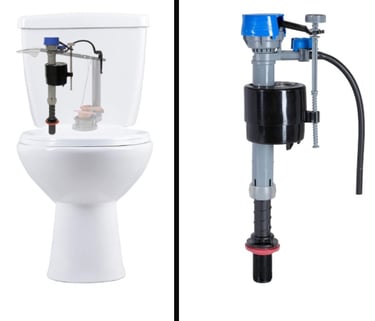
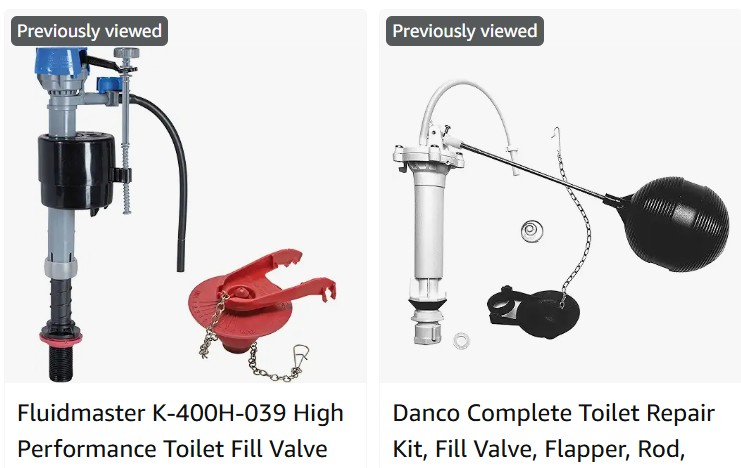
Screenshot from Fluidmaster/Amazon
Fill valve with float cup. Screenshot from Fluidmaster

I've got ten thumbs, so if I can fix a fill valve so can you. Lets dig in.
A toilet fill valve controls how your tank refills after every flush, and when it fails you'll usually hear it before you see it, with indicators like:
A toilet that runs constantly
Refills weakly
Hisses long after the tank should be full.
The good news is that a toilet fill valve is one of the easiest parts in the tank to repair or replace. Most fixes take fifteen to forty minutes with a wrench, a bucket, and no special plumbing skills.
HINT: Scroll down if you prefer video guidance over text
This guide walks through diagnosing the problem, repairing or replacing the valve, and explains the two different float styles:
The float cup
The ball-and-arm float
That way you know exactly which one you're dealing with before you start. The fill valve sits on the left side of most tanks, with the flush valve at the bottom center.
How does a toilet fill valve work?
The fill valve is the tall vertical part on one side of the tank, connected to the water supply line running up from the wall or floor. After a flush empties the tank, the valve opens and lets water back in. A float, either a cup or a ball, rises with the water level and shuts the valve off once the tank reaches the right height.
Most fill valves also feed a thin refill tube into the overflow tube, which tops off the bowl at the same time. It's not glamorous work, but neither is running a toilet blog, so we're used to it.
Signs your toilet fill valve needs attention
The toilet runs continuously or refills every few minutes on its own
Weak, slow, or unusually noisy refilling, hissing, whistling, or chattering
Water level sits too high near the overflow tube, or too low for a strong flush
Visible cracking, mineral buildup, or a valve you know is eight to ten years old or older
Float cup vs. ball-and-arm float: what's the difference?
Every fill valve uses one of two float styles to know when to shut off. The picture below shows both side by side, here's what each one actually does and how to fine-tune it.
Float cup (left) slides on the shaft. Ball-and-arm (right) rides at the end of a lever.
How to replace a toilet fill valve
If cleaning doesn't fix it, or the valve is old and brittle, replacing it is straightforward and takes most people under half an hour.
This excellent video shows how to replace a fill valve with float cup:
Shut off the water and drain the tank fully, then sponge out the last inch or so.
Remove the old valve. Disconnect the supply line, then unscrew the locknut underneath the tank that holds the valve in place, and lift the valve out.
Set the height and seat the new valve. Most valves adjust telescopically to match your tank's depth. Feed it through the base hole and hand-tighten the locknut from underneath, snug but not overtightened. Cracked porcelain is an expensive mistake.
Connect the refill tube from the top of the new valve into the overflow tube.
Reconnect the supply line and turn the water on slowly, checking for leaks at the base and the connection.
Adjust the float to the correct water level (see below) and flush to confirm a clean shutoff.
How to adjust the water level after repair or replacement
The correct level is usually marked inside the tank, roughly an inch below the top of the overflow tube. Too high, and the toilet runs into the overflow constantly. Too low, and every flush comes out weak.
Use the adjustment method for your float type (squeeze clip or screw for a float cup, bending the arm or turning the screw for a ball-and-arm), then flush and check the line again. Small adjustments, repeated a couple of times, get it dialed in faster than one big turn.
Frequently asked questions
How much does it cost to replace a toilet fill valve?
A new valve typically runs 10 to 25 dollars, and doing the swap yourself keeps the total job close to that price.
Can I repair a fill valve instead of replacing it?
Sometimes.
Cleaning mineral buildup or swapping a worn seal fixes plenty of minor issues. Valves are inexpensive enough, though, that most plumbers just replace the whole unit rather than repair individual parts.
How do I know if I have a float cup or ball-and-arm valve?
Open the tank lid. If there's a ball floating on a metal or plastic arm, it's a ball-and-arm float. If it's a cylindrical collar sliding along the valve's central shaft, it's a float cup.
Why does my toilet fill valve keep running?
Usually a worn seal, mineral buildup in the valve seat, or a float set too high. Run through the repair steps above before assuming you need a full replacement.
How long does a toilet fill valve last?
Most fill valves last five to ten years, though hard water can shorten that considerably.
This blog is reader-supported. If you buy through links on this page, I may earn a commission at no extra cost to you.
View on Amazon:
View on Amazon:
Float cup
The float cup rides directly on the fill valve's central shaft and is the standard on most valves sold today. It slides up and down with the water level and shuts the valve at a set height.
To adjust it, look for a small clip or spring-loaded rod partway down the shaft. Squeeze the clip and slide it up to raise the water level, or down to lower it. Some models use an adjustment screw at the top instead, turning it clockwise usually raises the level.
Ball-and-arm float
Found mostly in older toilets, a solid ball floats on the water's surface and connects to the fill valve through a metal or plastic arm. As the tank fills, the ball rises, and once it reaches the right height the arm's lever action shuts the valve off.
To adjust it, gently bend the arm downward to lower the water level or upward to raise it, or turn the small screw where the arm meets the valve body. Bend slowly. A forced arm can crack, and then you're back to square one.