4 Types of Camping Toilets
CAMPING TOILETS
Different Camping Toilets for Different Scenarios
Whether you're on a solo trek moving from campsite to campsite, or a week long, static camping vacation with a family of four, shit will happen. The question is what kind of toilet is best suited to be on the receiving end.
Before forking out your hard earned dollars, it helps to understand what you're actually looking for. As it happens, not all potties are created equal. That's why I made this guide - to help you make an informed decision on what type of camping toilet you need.
Lets dive in.
Composting Toilets
An odorless option that use natural processes to break down the waste, making them a more environmentally friendly option. Typically consist of two separate chambers for liquid and solid waste.
Folding Toilets
These consist of a collapsible frame with a built-in or attachable seat, making them incredibly lightweight and compact. If Seal Team 6 were to use a camping toilet, this would probably be it.
When you need to go, simply fold out the frame, insert a disposable liner and attach the seat. Revers the process when you're finished.
Bucket toilets
Together with Folding toilets, Bucket-style toilets are the least glamorous options (my first camping toilet experience was actually on one of these). As the name indicates, its a simple option that essentially consists of a sturdy bucket with a seat . You use them with disposable liners.
Chemical Toilets
These feature a built in seat, a waste tank and a separate chemical solution tank that effectively neutralizes odors. The chemical solution typically consist of biocides and deodorizers.
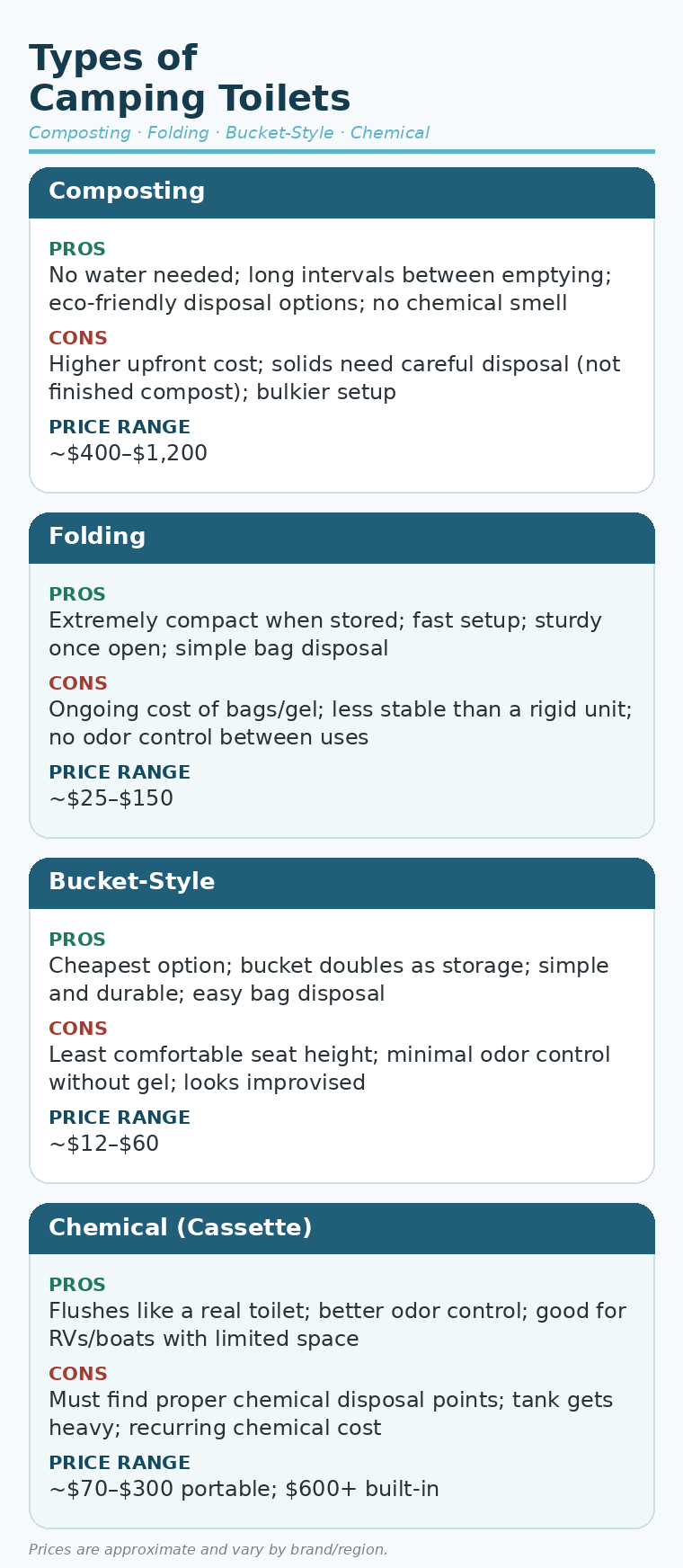
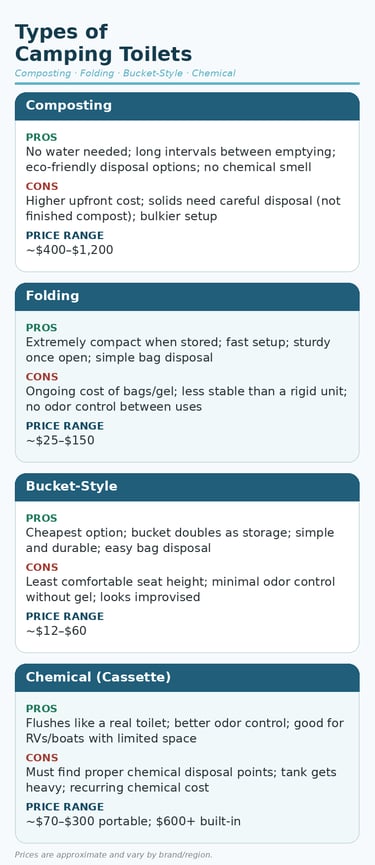
4 types of camping toilets
Lets walk through the four main types of camping toilets — what they're actually good for, and where on earth you're supposed to put the waste once you're done.
(The post continues beneath the table)
Best for: Van lifers, off-grid cabins, and anyone boondocking for extended stretches without hookups.
Disposal: Liquids are the easy part. A urine container can be discreetly carried into a public restroom, pit toilet and dumped there, or in some cases poured on hard ground away from camp so it evaporates and doesn't attract wildlife.
Solids are trickier. Despite looking like dark soil, the material in the bin needs weeks to months to breakdown to finished compost. Many thrown the waste in the regular household trash (like with diapers), which is legal. The eco-friendly option is to empty the solids onto a home compost pile so the composting process can finish.
Pros: Ideal for off-grid living and long-term use. Separate chambers and the use of bulking agents makes these rascals odorless. Environmentally friendly.
Cons: Tend to be bulkier and more expensive. Requires maintenance like turning the "compost" from time to time.
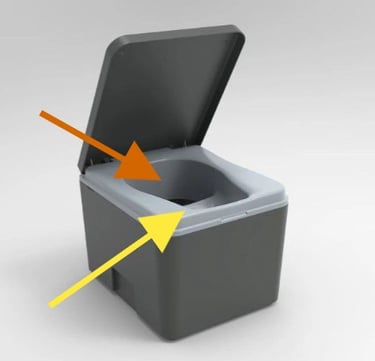
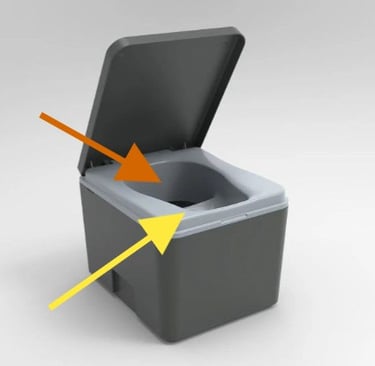
Trelino composting camping toilet. The brown arrow is where number two goes, while the the cup in the front (yellow arrow) is for number one. Screenshot from Trelino.
Best for: Car camping, tent camping, and situations where storage space is at a premium but you still want something sturdy to sit on.
Disposal: Just seal up the bags and throw it in the trash.
Pros: Affordable and easy to use. Great for trips where space or weight is a concern.
Cons: Generally less durable than the other models.
Best for: RVs, campervans, and boats — especially smaller rigs where a full black-water tank isn't practical, or anyone who wants a "real toilet" feel with a flush.
Disposal: Much more restrictive than the rest. Toilets using glutaraldehyde or formaldehyde should never be dumped in a normal toilet, since those chemicals can damage home or septic plumbing. They need to go to a chemical disposal point or RV dump station.
Pros: Odorless and easy to use. Just add the chemical solution to the waste tank and flush the toilet after each use. The most comfortable option.
Cons: Uses chemicals which may require disposal at designated sites.
Best for: Budget-conscious campers and as emergency backup. Often used in hunting camps.
Disposal: Same as folding toilets — bag it, seal it, bin it.
Pros: Cost-effective and budget-friendly. Easy to use and maintain. Just place a disposable liner/bag inside the bucket, and you're ready to go. A no-nonsens option for campers who's not squeamish about odor.
Cons: Lack built-in odor control. Limited capacity and may require more frequent emptying.
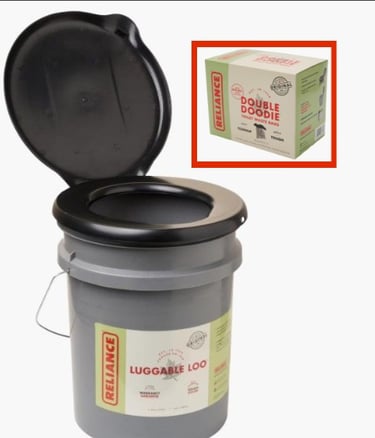
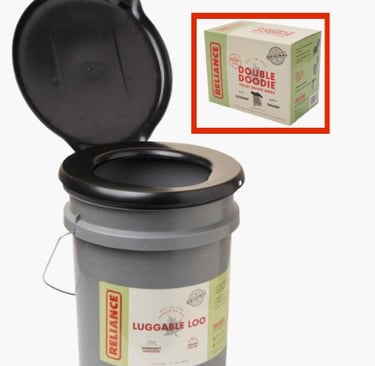
Luggable Loo, a bucket toilet that uses disposable bags. Screenshots from Rei.com.
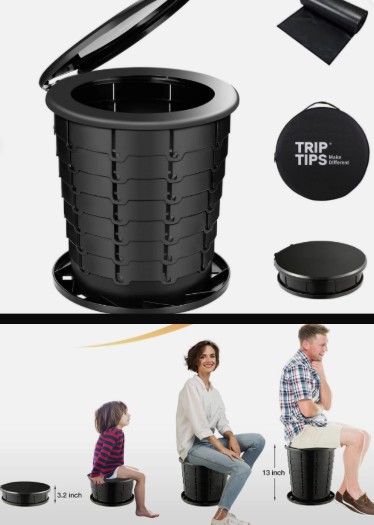
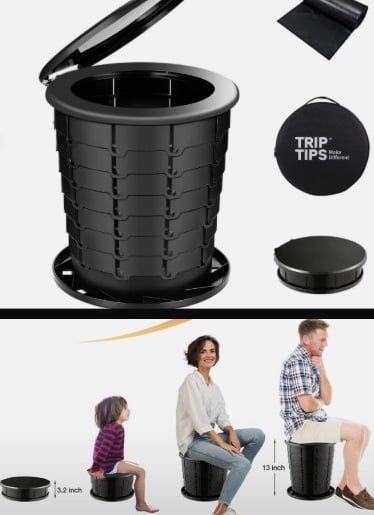
Foldable camping toilet. Screenshot from Ebay.
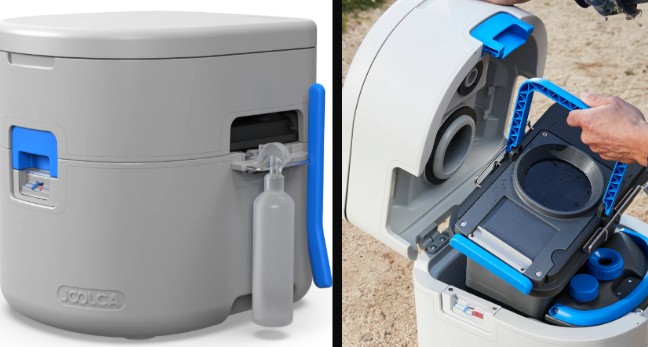
GottaGo portable camping toilet. Comes with the choice of chemical or eco cassette. Screenshot from Joolca.com.
Nothing tests the bonds of family love quite like outdoor sanitation. Choosing the right type of camping toilet can determine if your next outdoors adventure becomes a blissful retreat or a legendary disaster.
I'd like to say that "I have seen—and smelled—it all", but I haven't. I do, however, have a lot of experience. Through backcountry explorations and remote family excursions, I have tested (and emptied) many variations of the portable throne over the years.

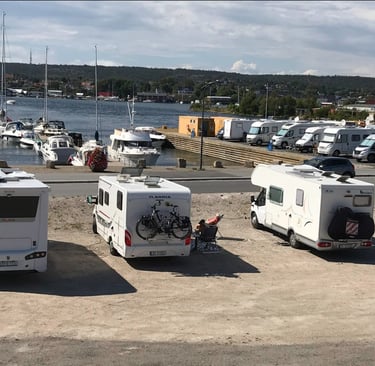
Camping can be heaven on earth ... if you have the right camping toilet.